
Our team is so excited to have you join the family and we will take really good care of you the day you get your braces on. It is normal to be nervous, but we promise it will all be worth it! So, what should you expect the week after you get braces? We’re here to help guide you through that first week as you make adjustments.
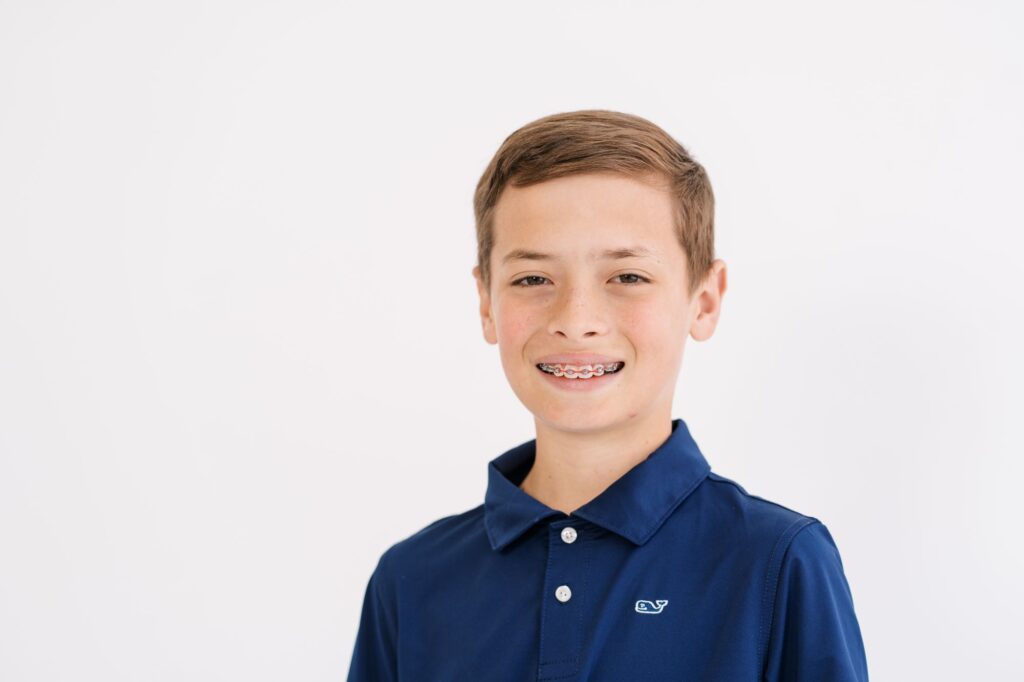
Expect Some SorenessWhat to Expect the First Week of Braces
Mild pressure is what to expect the first week of braces. Soreness begins 2 to 6 hours after your brackets go on, peaks on days 2 and 3, then fades by days 5 to 7. Your lips and cheeks adjust to the brackets, and chewing, speech, and brushing feel awkward before quickly becoming routine.
The bonding visit itself is comfortable. Dr. Cox cleans and prepares each tooth, places the brackets with adhesive, and threads the archwire. Nothing pinches, and no numbing is needed. The tenderness you feel later comes from your teeth beginning to shift, not from the placement.
Cheeks and lips need a few days to toughen up against the new hardware. Small sore spots are normal and temporary. Orthodontic wax covers rough corners while your mouth adapts.
Eating takes practice at first. Soft foods and smaller bites make week one much easier. Speech may feel slightly different for a day or two, especially with clear braces or lingual braces, then it evens out.
Knowing the pattern ahead of time removes most of the worry, and Ryan Cox Orthodontics walks you and your family through it before you leave the bonding visit. Here’s how those seven days usually unfold.
Day-by-Day Timeline: What to Expect the First Week of Braces
Day 1 brings a tight, slightly numb feeling as pressure builds. Tenderness peaks on days 2 and 3, when chewing feels sore and cheeks may get irritated. By days 3 and 4, wax handles rough spots. Soreness eases through days 5 to 7, and firmer foods become comfortable again.
| Day | What you’ll likely feel | What helps most |
|---|---|---|
| Day 1 | Tightness and pressure building 2 to 6 hours after bonding | Over-the-counter medication before soreness peaks, soft foods, cold water |
| Days 2 to 3 | Peak tenderness, sore chewing, tender gums | Salt water rinses, smoothies and soups, ice water |
| Days 3 to 4 | Cheek and lip irritation from bracket corners | Orthodontic wax, lip balm, gentle brushing |
| Days 5 to 7 | Soreness fading, chewing improving | Gradually add firmer foods, keep brushing after meals |
What Happens on Day 1?
Teeth feel tight rather than sore at first. Take ibuprofen or acetaminophen before the tenderness ramps up, following the label directions. Stick to yogurt, eggs, pasta, and other soft options for the rest of the day.
Why Are Days 2 and 3 the Most Tender?
This is the stretch most people remember. Rinse with salt water (1/2 teaspoon of salt in 8 ounces of warm water) three to four times a day to soothe tender gums and any small sore spots. Cold foods feel great right now.
How Do Cheeks Adjust on Days 3 and 4?
Bracket corners rub as your mouth learns their shape. Dry the bracket with a tissue, roll a pea-sized piece of wax, and press it over the rough edge. Replace the wax after meals and brushing.
When Does the First Week of Braces Start Feeling Normal?
Chewing gets easier each day from day 5 onward. Reintroduce firmer foods slowly, cutting them into small pieces. Skip anything hard, sticky, or chewy for the rest of your treatment.
Teeth may also feel slightly loose. That’s a normal, healthy sign that bone is remodeling around the roots as they move into better position.
How to Make the First Week Easier
To make the first week of braces easier, take over-the-counter medication before soreness peaks, eat soft and cold foods for the first few days, rinse with warm salt water when gums feel tender, and keep orthodontic wax within reach for rough bracket corners. Brushing after every meal protects your enamel while teeth begin to move.
A little preparation changes the whole experience. These steps keep the first seven days comfortable and protect your enamel while your teeth start moving:
- Medicate ahead of the curve. Take ibuprofen or acetaminophen shortly after your bonding visit, before pressure builds, and again as directed on the label.
- Stock the kitchen first. Yogurt, smoothies, scrambled eggs, soft pasta, soup, mashed potatoes, applesauce, and bananas cover nearly every meal.
- Go cold, not hot. Ice water and cool foods calm inflamed ligaments. Very hot liquids can make tenderness feel worse.
- Build a travel kit. Pack orthodontic wax, floss threaders, an interdental brush, lip balm, and an orthodontic toothbrush in a small pouch for school or work.
- Brush after every meal and floss nightly. Food trapped around brackets leads to white decalcification marks that don’t disappear when braces come off.
- Get a mouthguard before the first practice. An orthodontic mouthguard protects your lips and brackets from day one of week one.
Small habits set the tone for the whole treatment. Patients who master brushing and wax during week one rarely struggle later.
First-Week Experience by Braces Type
Every appliance creates pressure, but the sore spots differ. Here’s how the first week compares across the personalized treatment plans Dr. Cox offers:
| Type | Soreness level | Main irritation spot | Adjustment period | First-week tip |
|---|---|---|---|---|
| Metal braces | Moderate | Inner cheeks | 3 to 7 days | Wax the back bracket corners first |
| Clear braces | Moderate | Inner cheeks and lips | 3 to 7 days | Rinse after coffee, tea, and tomato sauce |
| Lingual braces | Moderate | Tongue | 5 to 10 days | Expect a brief lisp; read aloud to speed adjustment |
| Clear aligners | Mild with each new tray | Tray edges | 1 to 3 days per tray | Switch trays at bedtime |
Metal braces are the most common choice and the most predictable. Wax at the corners handles nearly all cheek irritation.
Clear braces feel much like metal braces. The brackets sit slightly larger on the tooth surface, and staining foods deserve a quick rinse.
Lingual braces attach behind your teeth, so your tongue does the adapting. A temporary lisp is the classic first-week experience and fades with practice.
Clear aligners bring gentle pressure each time you start a fresh tray. No wax needed, and you remove them to eat and brush. Dr. Cox checks how well each tray is tracking at your visits, so any tight spot gets addressed early rather than lingering through the series.
What to Buy for Your First Week in Braces
Most of what you need comes home with you. Ryan Cox Orthodontics sends you and your family off with a starter kit at the bonding visit, so wax, a specialty toothbrush, and written care instructions are already part of your personalized care.
A few extras are worth picking up:
- Interdental brushes for cleaning under the archwire
- Floss threaders or a floss designed for braces
- A water flosser if you want faster nightly cleanup
- Over-the-counter ibuprofen or acetaminophen for the first few days
- An orthodontic mouthguard if you play any contact sport
Honestly, the grocery restock is the biggest first-week task for most families. A cart full of soft foods goes further than any gadget.
Broken brackets and poking wires happen, especially early on.
Normal Soreness vs. When to Call Your Orthodontist
Generalized aching, tender chewing, slightly loose-feeling teeth, and small cheek sores are all normal during the first week of braces. Call your orthodontist if a bracket comes loose, a wire pokes through wax, soreness stays severe past 5 to 7 days, or an appliance piece breaks off.
Normal and expected:
- Dull, widespread aching in your teeth and gums
- Tenderness when biting into firmer foods
- Teeth that feel slightly loose
- Minor sores where brackets rub your cheeks
Worth a phone call:
- A loose bracket or one that slides along the archwire
- A poking wire that wax won’t cover. As a temporary fix, tuck the wire down with a clean pencil eraser and call the office to get it addressed
- Severe soreness that over-the-counter medication doesn’t touch after 5 to 7 days
- A broken band, lost separator, or swallowed appliance piece
None of these are emergencies in the scary sense. They just need a quick repair visit so your treatment stays on schedule. According to the American Association of Orthodontists, most bracket and wire issues can wait for a regular business-hours visit as long as you’re comfortable in the meantime.
The first week of braces takes a little patience, and then life goes right back to normal. At Ryan Cox Orthodontics, Dr. Ryan Cox is board certified by the American Board of Orthodontics and has been recognized locally as a top orthodontist for several years running, so you and your family are in experienced hands from the first visit through the last.
Our office welcomes patients of all ages, and a free consult is where every treatment plan begins. From age seven to 78, Dr. Cox reviews your personalized treatment plans and explains exactly what your own first week will look like, so you can live your life smiling from the day your braces go on.
Frequently Asked Questions About the First Week of Braces
How long do braces hurt after they are put on?
Tenderness typically starts 2 to 6 hours after bonding, peaks on days 2 and 3, and eases by days 5 to 7. Over-the-counter medication, soft foods, and salt water rinses handle almost all of it. After the first week, most people barely notice their braces except for a day or two after each adjustment visit.
What can I eat the first week with braces?
Choose soft foods that need little chewing: yogurt, smoothies, scrambled eggs, soft pasta, soup, mashed potatoes, oatmeal, applesauce, and bananas. Cold options feel especially good on tender teeth. Avoid hard, crunchy, sticky, and chewy foods, and cut firmer items into small pieces once chewing feels comfortable again.
Why do my teeth feel loose with braces?
Loose-feeling teeth are a normal part of how braces work. As gentle pressure moves each root, the bone and ligaments around it soften and rebuild in the new position. That remodeling makes teeth feel slightly mobile during treatment. Everything firms up again once your teeth settle and you wear your retainer as directed.
How do I use orthodontic wax correctly?
Wash your hands, then dry the bracket with a tissue so the wax will stick. Pinch off a pea-sized piece, roll it into a ball, and press it firmly over the rough bracket or wire end. Replace it after meals and brushing. Swallowing a small amount is harmless.
Can I brush normally the first week?
Yes, and you should. Brush after every meal with a soft or orthodontic toothbrush, angling the bristles above and below the brackets. Gums may bleed slightly at first if plaque has built up; consistent brushing calms that within days. Floss nightly with threaders or an interdental brush to protect the enamel around each bracket.
Will braces affect my speech?
Metal and clear braces rarely change speech beyond a day or two of feeling different. Lingual braces sit behind your teeth, so a mild temporary lisp is common for the first week or so. Reading out loud for a few minutes each day helps your tongue adapt faster.